

Executive Brief
International marketing does not fail only because of poor campaigns, weak advertising, or bad translation.
In many cases, it fails much earlier.
It fails when a business enters a foreign market without enough strategic clarity, market intelligence, cultural understanding, operational readiness, or entry-mode discipline.
For Blueprint Consulting Service, this is the central point:
International marketing is not just about promoting a product abroad. It is about preparing the business to compete, adapt, deliver, and grow in a different market environment.
Introduction: The Wrong Starting Point
Many companies approach international marketing with the wrong first question.
They ask:
“How do we market this product in another country?”
But the better question is:
“Are we actually ready to compete in that country?”
That difference matters.
International marketing is not simply domestic marketing translated into another language. It is marketing under different cultural, legal, political, competitive, economic, and operational conditions.
Cateora, Gilly, and Graham describe international marketing as a discipline shaped by cultural and environmental differences, not just by promotional decisions. Their framework emphasizes that global marketers must understand foreign environments, adapt to cultural uniqueness, and avoid the self-reference criterion: the tendency to interpret foreign markets through the assumptions of one’s home market.
This is where many international marketing failures begin.
Not in the campaign.
Not in the media plan.
Not in the slogan.
They begin before marketing execution starts.
The Myth: International Marketing Is a Communication Problem
When international growth underperforms, companies often blame the visible parts of marketing:
- The ads were not strong enough.
- The content was not localized enough.
- The distributor did not perform.
- The agency did not understand the market.
- The campaign did not generate leads.
Sometimes these are real issues.
But often, they are symptoms of deeper problems.
- The business may have selected the wrong market.
- It may have misunderstood demand.
- It may have chosen the wrong entry mode.
- It may not have adapted the product.
- It may have underestimated cultural resistance.
- It may have lacked local partnerships.
- It may have entered without operational capacity.
In other words, marketing becomes the place where the failure appears, not where it started.
Why This Matters Now
International expansion is becoming more attractive and more difficult at the same time.
Digital channels make it easier for companies to reach foreign customers. Cross-border e-commerce, remote selling, AI translation, international logistics platforms, and global social media have reduced some barriers to entry.
But the global environment is also more complex.
Trade tensions, regulatory fragmentation, supply-chain risk, local data rules, political instability, currency volatility, and changing consumer expectations all affect international market performance.
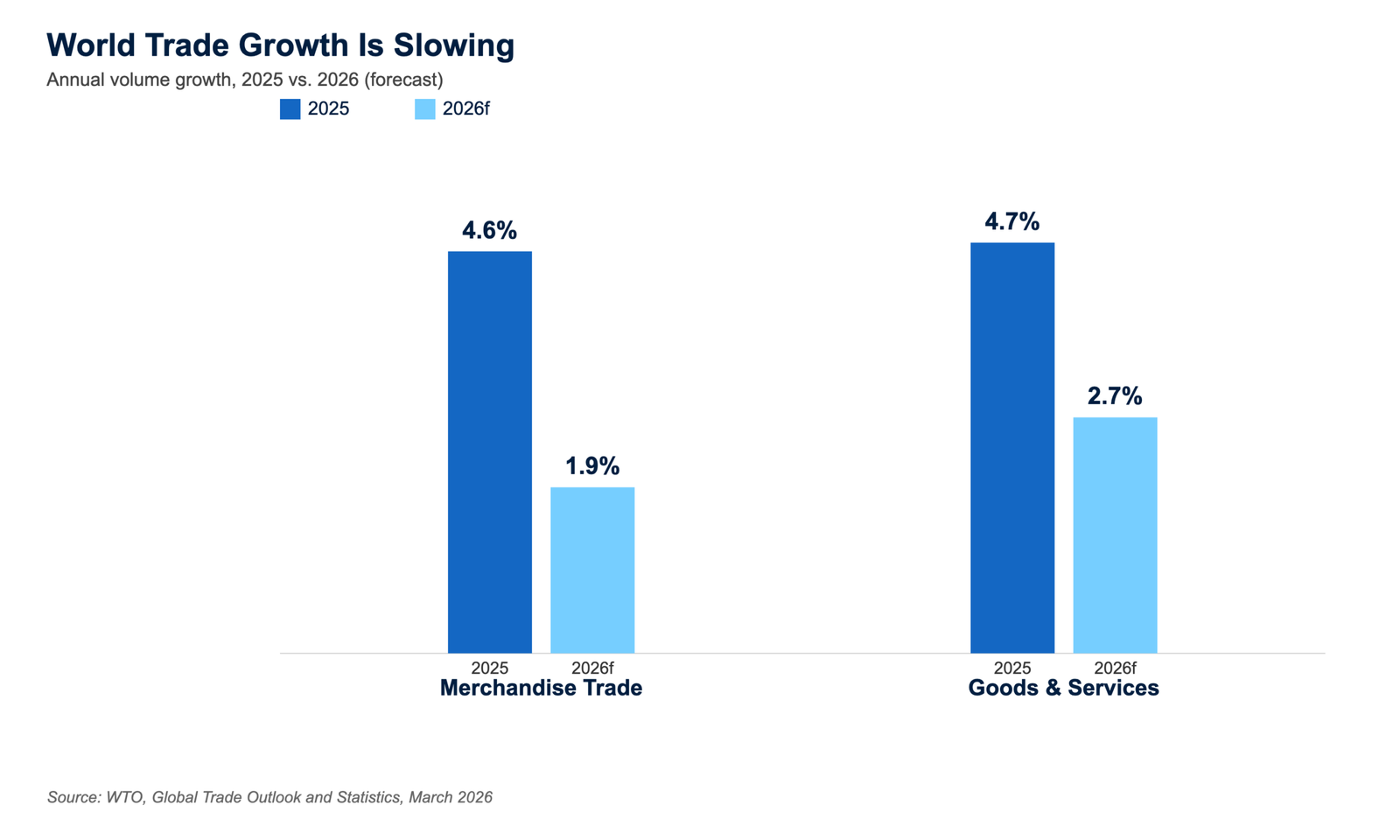
The WTO’s recent trade outlooks show how global trade remains exposed to policy uncertainty and geopolitical disruption, making market selection and risk assessment more important than ever.
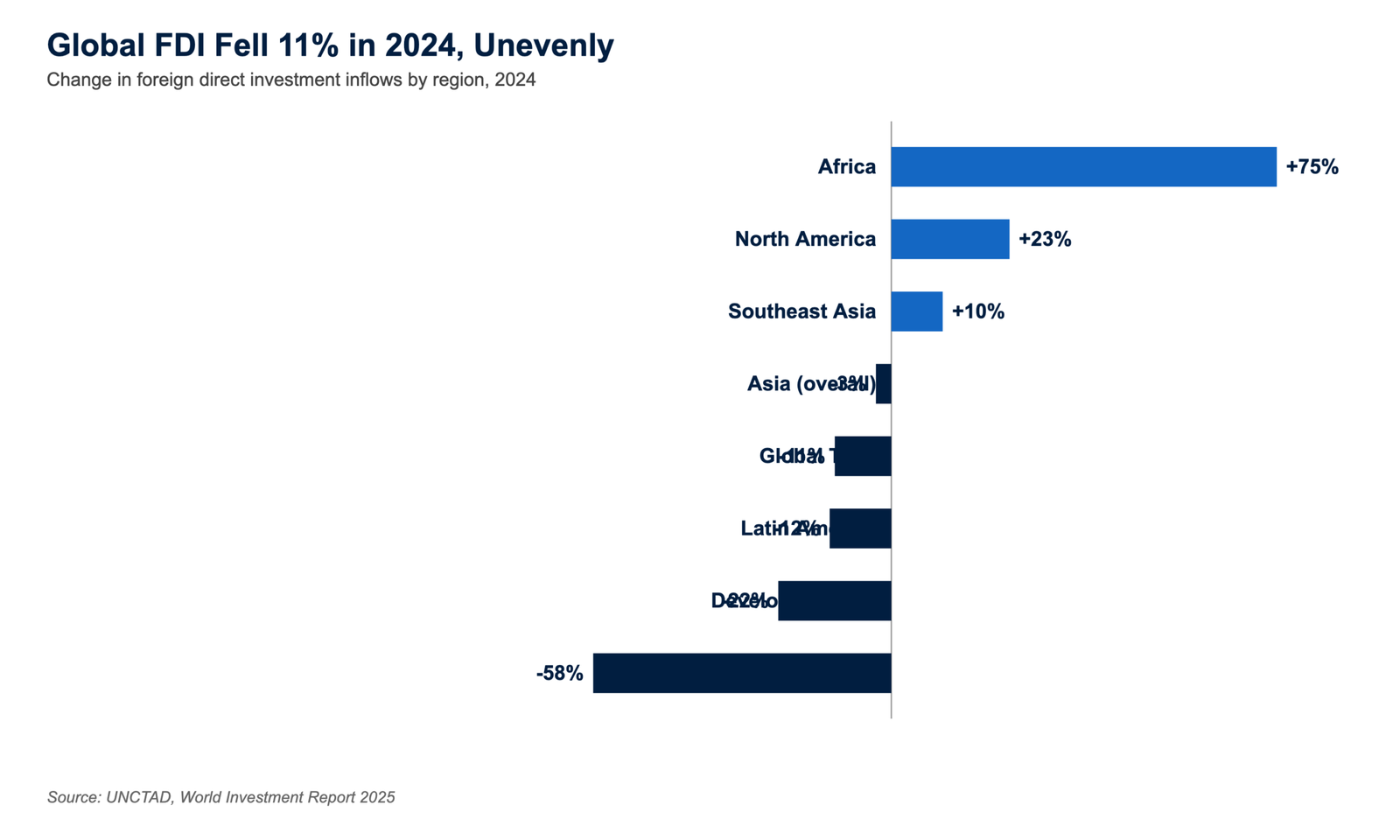
UNCTAD’s investment reporting also shows that international investment flows are uneven and sensitive to economic uncertainty, policy shifts, and regional differences. This reinforces a key lesson: international growth cannot be treated as a simple market-access exercise. It must be treated as a strategic decision.
The Seven Reasons International Marketing Fails Before Marketing Begins
1. Companies Choose Markets Reactively
Many businesses enter foreign markets because of opportunity signals:
- A distributor approaches them.
- A competitor is already there.
- A trade show produces interest.
- A friend knows someone in the market.
- A customer asks for supply.
These signals are useful.
But they are not a market strategy.
The market selection materials you shared make a clear distinction between reactive and proactive market selection. Reactive selection uses past sales, leads, competitors, trade shows, and expert conversations. It is fast and low-cost, but it can mislead the business. Proactive selection uses independent analysis, indicators, barriers, tariffs, and country comparisons.
This is one of the most important international marketing lessons for SMEs.
A market that shows interest is not always a market worth entering.
There is a difference between demand signals and strategic fit.
A company should assess market size, growth, accessibility, economic stability, political climate, cultural climate, environmental factors, and geographic factors before committing resources.
Blueprint Consulting Service Perspective
International marketing does not begin with promotion. It begins with market selection discipline. If the wrong market is selected, even excellent marketing will struggle to create sustainable growth.
2. Companies Underestimate Culture
Culture affects how people interpret value, trust, authority, risk, quality, relationships, time, service, communication, and buying behavior.
It affects what people buy.
It affects why they buy.
It affects who influences the decision.
It affects how quickly decisions are made.
It affects whether the customer trusts direct messaging or prefers relationship-building.
The Terpstra and Sarathy cultural framework identifies eight categories that influence international marketing: language, religion, values and attitudes, education, social organizations, technology and material culture, law and politics, and aesthetics.
This is not theory.
It directly affects marketing execution.
A message that feels confident in one market may feel arrogant in another.
A discount that feels attractive in one culture may damage prestige in another.
A campaign built around individual achievement may fail in a collectivist market.
A humorous message may work domestically and offend internationally.
Kiss, Bow, or Shake Hands gives practical examples of how cultural misunderstanding can damage international business. Nike had to recall shoes after a design element was perceived by some Muslim consumers as resembling the Arabic word for Allah, and McDonald’s faced lawsuits related to vegetarian claims and beef flavoring in fries.
The lesson is simple:
Culture is not a soft issue.
Culture is a commercial risk.
Blueprint Consulting Service Perspective
Companies do not fail internationally because cultures are too different. They fail because they assume similarity too quickly.
3. Companies Confuse Translation with Localization
Translation changes words.
Localization changes meaning.
A translated campaign may still fail if it does not reflect local buying motivations, cultural values, social norms, category expectations, and communication style.
This is especially important in markets with high-context communication styles, where meaning is often carried through context, implication, tone, relationship, and non-verbal signals. The Terpstra and Sarathy material highlights the distinction between low-context cultures, where what is said is usually what is meant, and high-context cultures, where hidden meaning and body language matter more.
This matters for international branding, advertising, websites, sales presentations, proposals, and negotiation.
A company may translate its offer perfectly and still communicate the wrong thing.
4. Companies Enter Before Their Operations Are Ready
International marketing creates expectations.
Operations must deliver them.
If a company markets internationally before its delivery system is ready, growth becomes dangerous.
The problems usually appear after demand is generated:
- Slow delivery.
- Poor customer support.
- Weak after-sales service.
- Inconsistent quality.
- No local compliance process.
- Unclear distributor responsibilities.
- High logistics costs.
- Poor response time.
- Misaligned sales promises.
In international markets, operational weaknesses become more expensive because distance, regulation, time zones, cultural expectations, and logistics complexity amplify every mistake.
This is especially important for SMEs.
Many SMEs think international marketing is about finding customers abroad.
But international success often depends on the less visible questions:
- Can we serve this market reliably?
- Can we support customers after the sale?
- Can we manage local partners?
- Can we protect quality?
- Can we handle returns, complaints, payments, customs, and documentation?
Marketing cannot compensate for an operating model that is not ready.
Blueprint Consulting Service Perspective
International expansion should not be treated as a marketing campaign. It should be treated as a business readiness test.
5. Companies Choose the Wrong Entry Mode
The choice of entry mode determines risk, control, investment, speed, learning, and local responsiveness.
Your materials identify several international entry modes, including exporting, licensing, franchising, joint ventures, strategic alliances, acquisitions, wholly owned subsidiaries, contract manufacturing, turnkey projects, management contracts, and countertrade.
Each mode creates different trade-offs.
Exporting may be fast and lower risk, but it may limit local control.
Licensing can expand reach quickly, but it can expose intellectual property and reduce brand control.
Franchising can scale a business format, but requires strong operational standards.
Joint ventures provide local knowledge, but create governance complexity.
Acquisitions provide fast market access, but introduce integration risk.
Wholly owned subsidiaries create control, but require high capital and management commitment.
The wrong entry mode can damage a strong market opportunity.
A company may enter with too little control in a market where brand consistency matters.
Or it may overinvest in a market where demand was never properly validated.
Or it may rely on a distributor when it actually needs a strategic local partner.
Blueprint Consulting Service Perspective
Entry mode is not an administrative decision. It is a strategic design choice.
6. Companies Misread Competitive Reality
A market can be attractive and still be difficult to win.
Many companies overestimate demand and underestimate competition.
They look at population, GDP, or growth rates and assume the opportunity is large.
But international market attractiveness depends on more than macro indicators.
The market selection model in your materials emphasizes the importance of industry indicators such as entry barriers, rivalry, supplier power, buyer power, substitutes, industry growth, stability, and risk.
This is where many companies make a strategic mistake.
They assess the market.
But they do not assess their right to win.
A country may have high demand, but the company may lack:
- local credibility,
- distribution access,
- price competitiveness,
- brand awareness,
- regulatory readiness,
- after-sales infrastructure,
- or partner capability.
International marketing should not only ask:
“Is this market attractive?”
It should also ask:
“Why would this market choose us?”
7. Companies Lack an International Operating Rhythm
International expansion requires consistent management.
Not enthusiasm.
Not one campaign.
Not a distributor agreement that no one follows up on.
It requires rhythm.
- Market reviews.
- Partner reviews.
- Sales pipeline visibility.
- Customer feedback loops.
- Regulatory monitoring.
- Competitor intelligence.
- Marketing performance analysis.
- Operational issue tracking.
- Decision forums.
Without a management rhythm, international expansion becomes reactive.
The business starts responding to problems instead of managing the market.
This connects directly to the broader philosophy of Blueprint Consulting Service:
Growth does not become sustainable through effort alone.
It becomes sustainable through judgment, alignment, visibility, ownership, and operating discipline.
The Blueprint International Readiness Framework™
Before entering a foreign market, business leaders should assess seven layers of readiness.
1. Market Attractiveness
Is the market large, growing, accessible, and commercially relevant?
2. Strategic Fit
Does this market support the company’s long-term direction, positioning, and competitive advantage?
3. Cultural Fit
Does the business understand local values, behaviors, communication norms, and buying motivations?
4. Operational Readiness
Can the business deliver, support, manage, and maintain quality in the target market?
5. Commercial Readiness
Is the value proposition, pricing, channel strategy, sales process, and customer journey ready for the market?
6. Entry Mode Fit
Is the selected entry mode aligned with the company’s risk appetite, control needs, resources, and market conditions?
7. Management Rhythm
Does the company have the governance, reporting, KPIs, and review routines needed to manage international growth?
If any of these layers are weak, international marketing may generate activity without creating sustainable growth.
Executive Questions Before Entering a Foreign Market
Before launching international marketing activities, leadership teams should ask:
- Why this market, and why now?
- What evidence proves demand exists?
- What customer segment are we targeting?
- What local problem are we solving?
- What cultural assumptions could mislead us?
- What needs to be adapted: product, pricing, messaging, service, channel, or support?
- Which entry mode gives us the right balance of speed, control, investment, and risk?
- Who owns international market performance internally?
- How will we measure progress?
- What would make us exit or pause the market?
These questions are not academic.
They protect the business from expensive expansion mistakes.
Common Mistakes SMEs Make in International Marketing
- Choosing markets based on personal contacts rather than structured analysis.
- Assuming a successful domestic value proposition will work abroad.
- Translating marketing material without adapting the message.
- Treating cultural research as optional.
- Underestimating legal, regulatory, and tariff barriers.
- Choosing distributors without clear governance.
- Entering too many markets at once.
- Running campaigns before operations are ready.
- Measuring activity instead of market traction.
- Failing to build a repeatable international growth system.
Key Takeaways
International marketing fails before marketing begins when the business enters without readiness.
The most common causes are poor market selection, weak cultural understanding, wrong entry mode, operational gaps, unclear positioning, and lack of management rhythm.
Marketing should not be used to compensate for strategic uncertainty.
A foreign market is not just a new audience.
It is a different business environment.
The companies that succeed internationally do not simply communicate better.
They prepare better.
Final Perspective
International marketing is often misunderstood.
It is not only about campaigns, content, advertising, or lead generation.
It is the discipline of preparing a business to compete in a market where the rules, expectations, risks, and buying behaviors may be different.
That is why international marketing should start before marketing execution.
It should start with strategic judgment.
Market selection.
Cultural intelligence.
Operational readiness.
Entry-mode discipline.
Commercial alignment.
Management rhythm.
Because the real question is not:
“How do we promote ourselves internationally?”
The real question is:
“Are we designed to win internationally?”
That is where international marketing truly begins.
Ready to Expand With Confidence?
Blueprint Consulting Service helps businesses answer that question before they enter a new market, through the International Readiness Framework™ and hands-on strategic guidance. If you’re weighing international expansion, book a consultation and let’s assess whether you’re truly ready to win.
